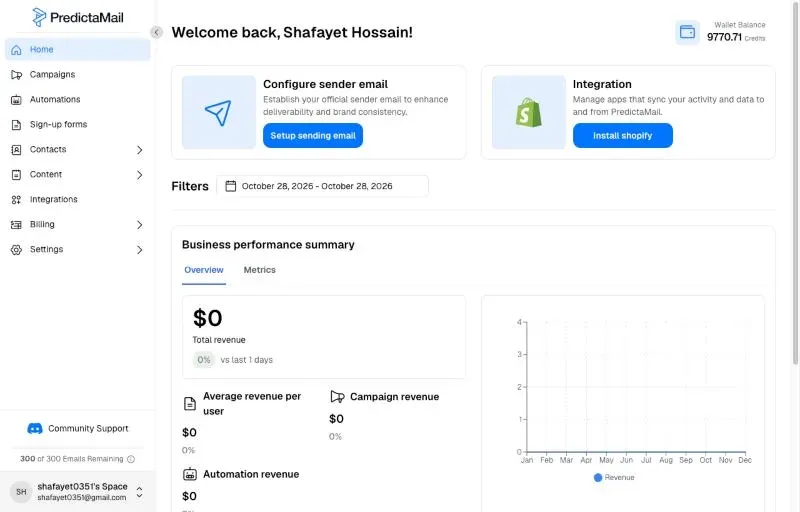
PredictaMail
An email marketing platform for ecommerce, built around three editors and a Shopify sync.

- Built at
- Debutify
- Role
- Frontend lead
- Timeline
- 2023 to present
- Stack
- React, TypeScript, Easy-Email, esbuild, Shopify App Extensions, Node.js
- Live
- predictamail.ai
Ecommerce email tooling is solved for large brands and unsolved for everyone else. The platforms that work are priced for enterprise; the affordable ones hand a marketer an editor that produces email which breaks in Outlook. PredictaMail aims at that gap, and I led the frontend.
The problem
A marketing platform is not one product. It is three editors and an integration, each a different engineering problem wearing the same visual language — and the marketer has to move between them without noticing the seams.
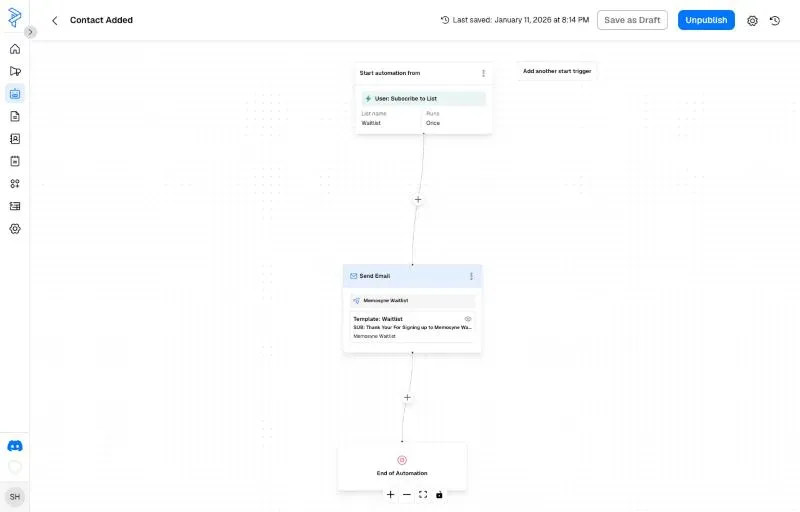
The automation builder
A canvas where a trigger starts a flow and steps hang below it. Each node is a real thing with real configuration: a list subscription, a send with a chosen template. The constraint that shapes it is that someone who has never seen a flowchart has to read their own automation back and believe it.
The sign-up forms
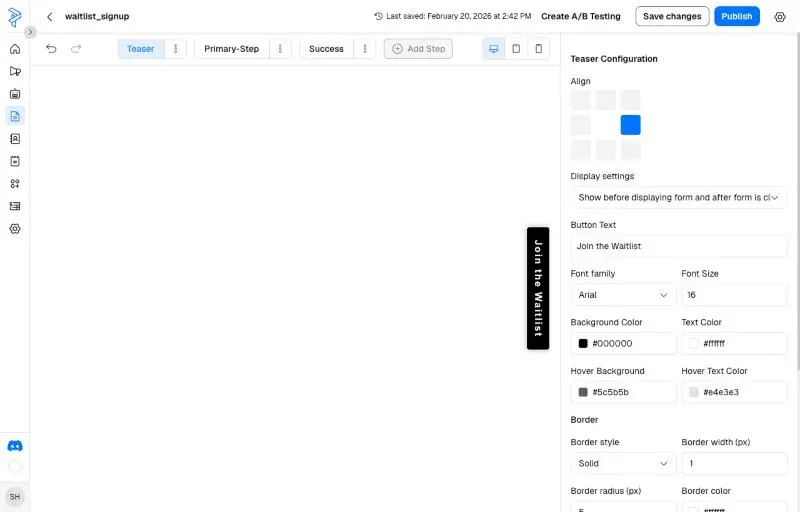
A multi-step builder with its own editor — a teaser, the form, a success state, each independently styled, with A/B testing across variants and device previews. The output is embedded in a storefront the builder knows nothing about, so it has to survive someone else’s theme.
The email editor
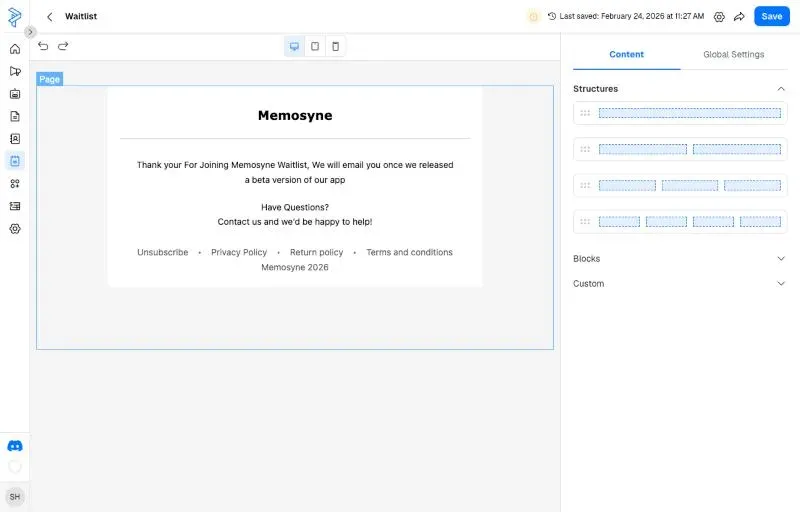
Built by extending Easy-Email, with an esbuild pipeline so the editor ships as its own bundle. It is large and needed on one route; bundling it independently keeps it off every other page. The customization was in the block set, the theming, and the ecommerce-specific pieces — product blocks, discount blocks, brand defaults.
What ties them together
All three editors are schema-driven. Each produces a document rather than markup — a flow graph, a form definition, an email tree — and rendering is separate from editing. That is what lets an automation be previewed, versioned and executed without the editor involved. The Shopify integration is what makes any of it matter: it syncs storefront activity so segments and triggers reflect what shoppers actually did.