BlogKit
A headless CMS for dropping a real blog into a Next.js project without building one.
- Built at
- On my own
- Role
- Founder and sole engineer
- Timeline
- 2025 to present
- Stack
- Next.js, TypeScript, PostgreSQL, REST API
- Live
- blogkit.co
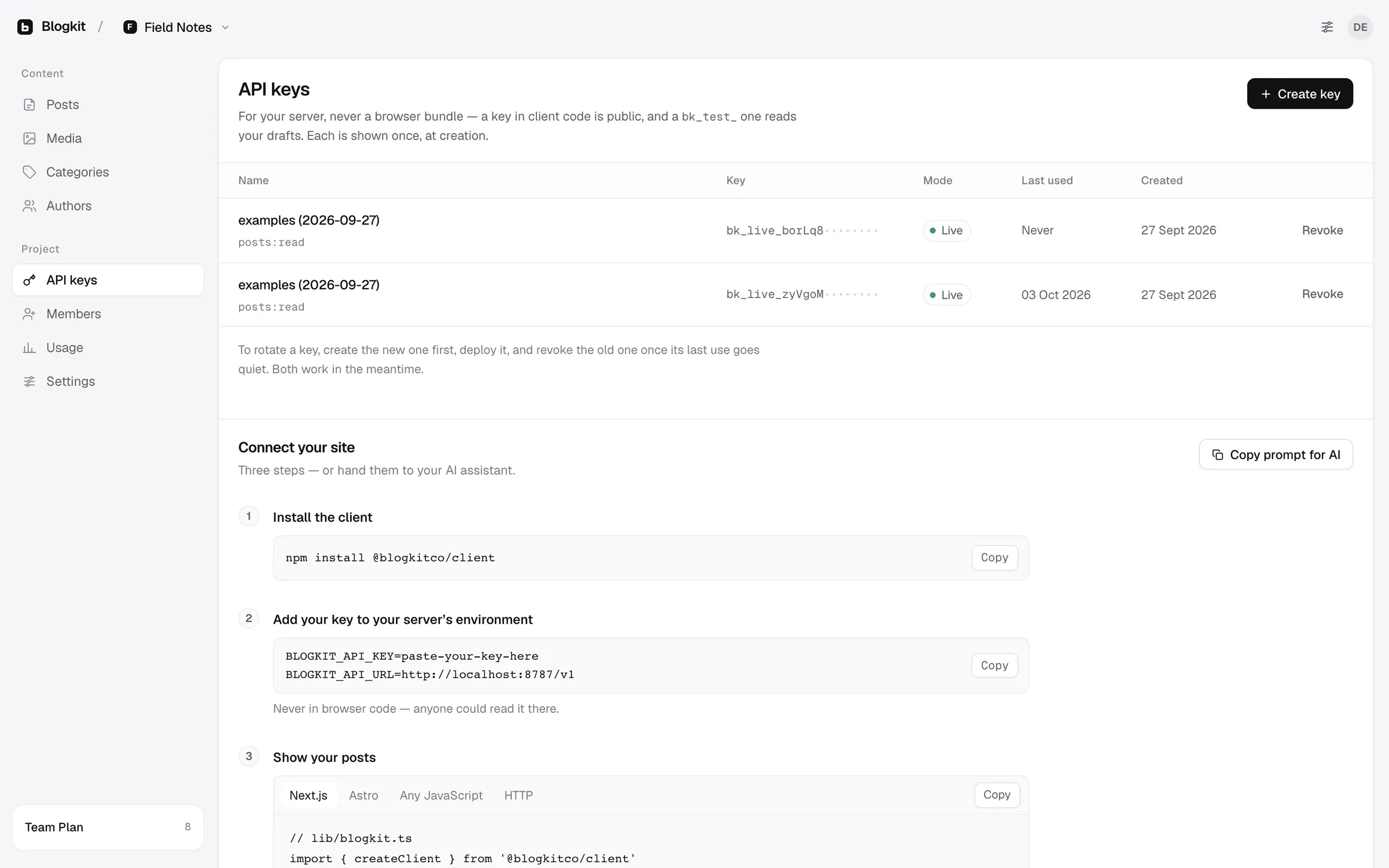
Adding a blog to an existing product is a week of work that produces nothing a user would pay for: an editor, a media pipeline, drafts and scheduling, SEO metadata, a feed. BlogKit is that week, already done, behind an API.
The problem
The alternatives each fail differently. A full CMS is a platform to host and learn for one blog. Markdown in the repo means every post is a deploy and no non-engineer can publish. A SaaS blog platform lives on its own domain, giving away the SEO value that was the reason for the blog.
An editor people will actually write in
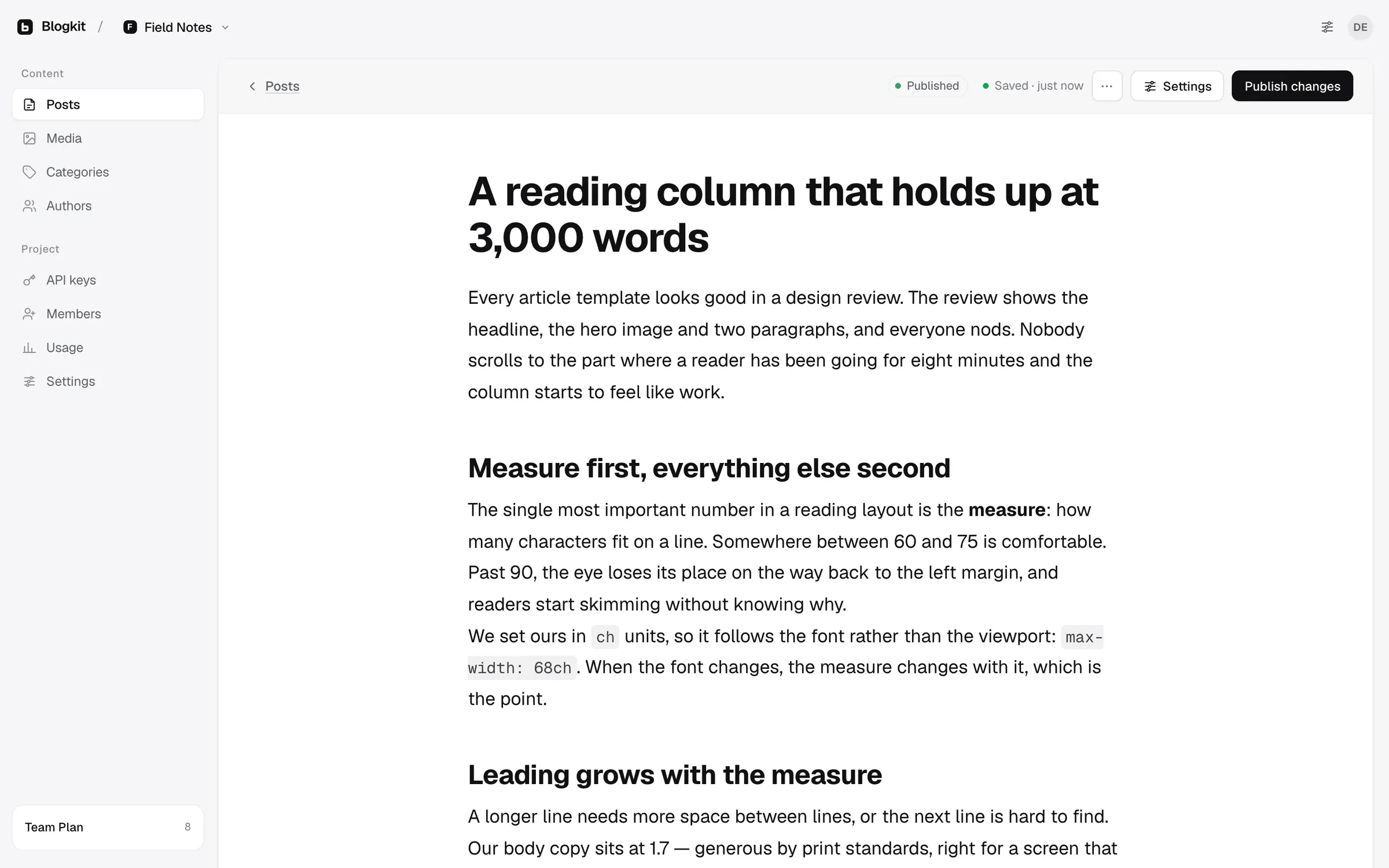
The writing surface is the product for one of its two audiences, so it is a calm reading column rather than a page of toolbars — formatting appears on selection, blocks are inserted from one menu, and the measure is set where long-form text stays readable.
Publishing is a decision, not a save
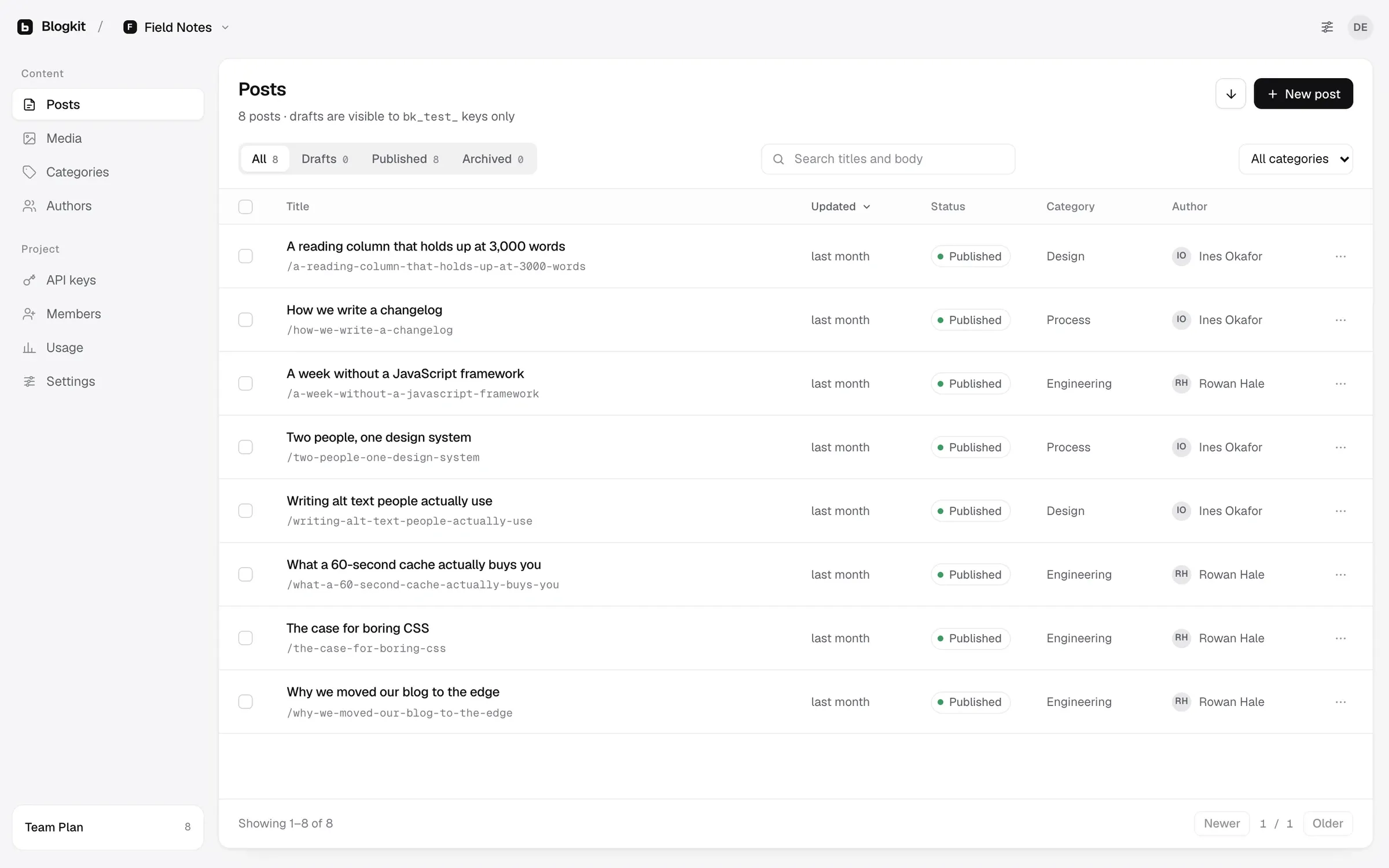
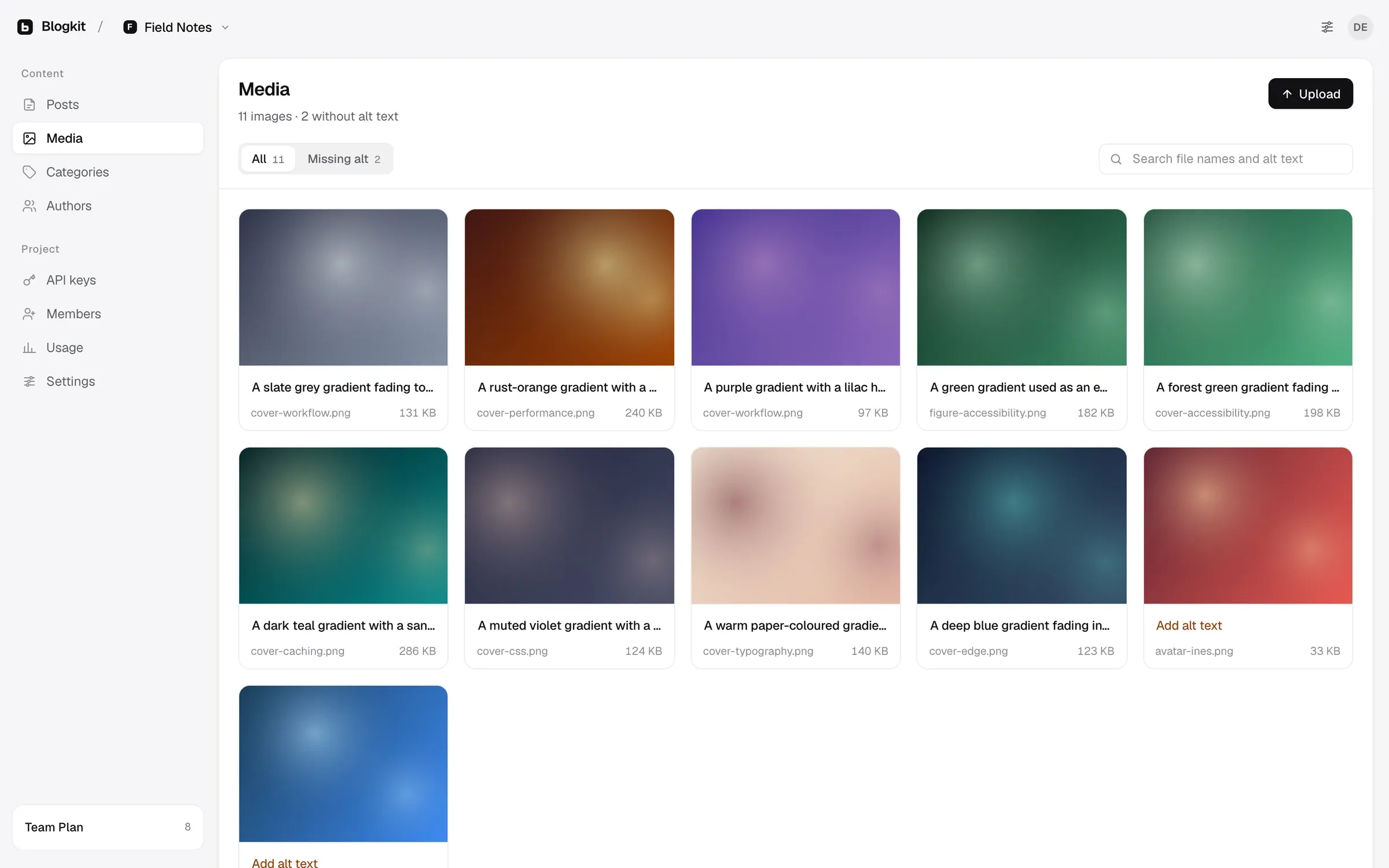
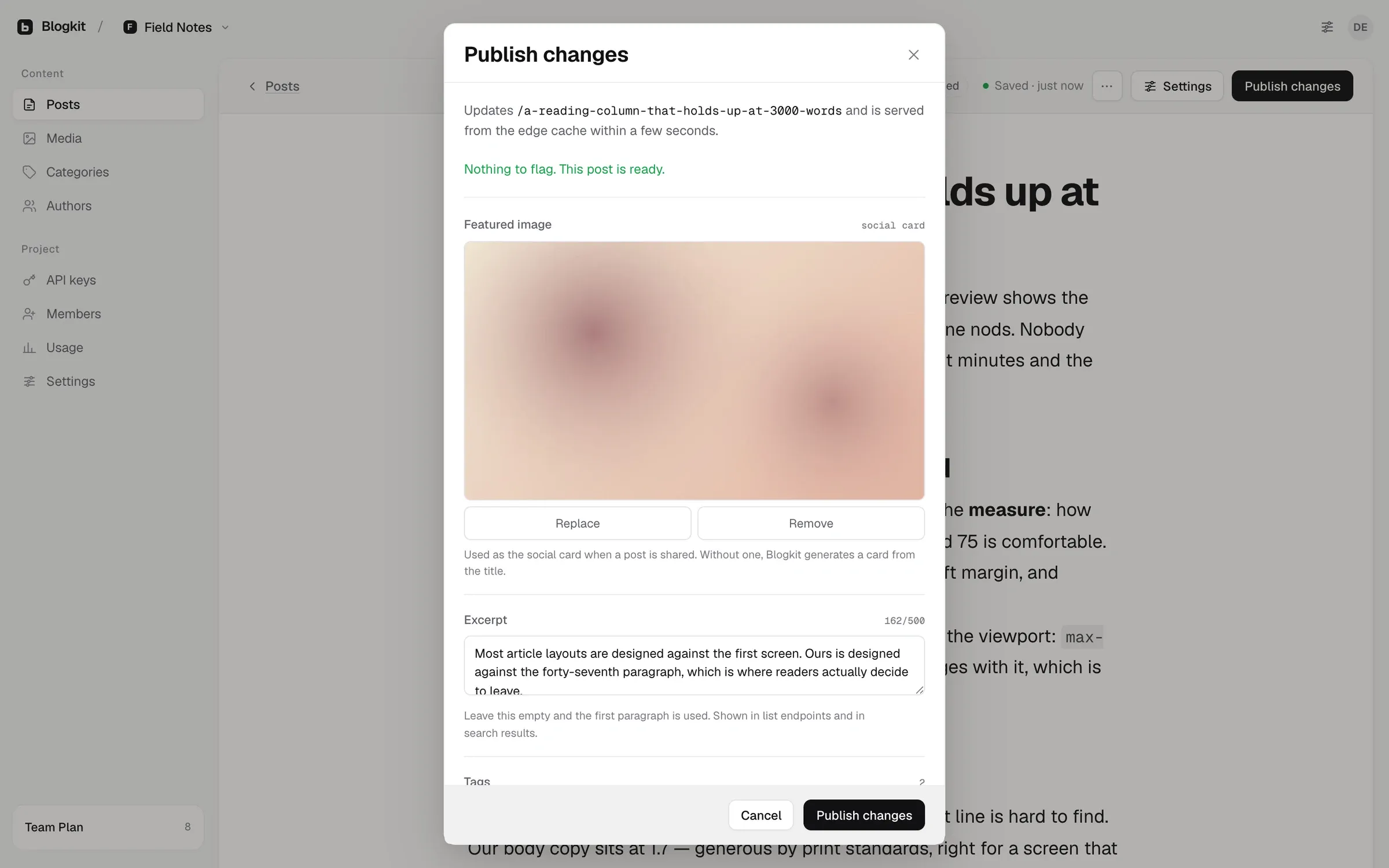
A post goes out with its own excerpt and featured image, chosen at the moment of publishing, and the cache clears on the way.
How it works
BlogKit owns none of the presentation. It returns structured content and metadata; the host project owns routing, layout and styling entirely. That keeps the integration shallow enough to adopt in an afternoon, and shallow enough to leave.